Choosing warm light for every room
Light has a colour, and it changes how a room feels long before you notice the furniture. This guide explains colour temperature, brightness and how to layer lamps so that each room works from morning coffee to late-night reading.
What colour temperature means
Colour temperature is measured in K. Low numbers look amber, like a candle; high numbers look bluish, like an overcast noon.
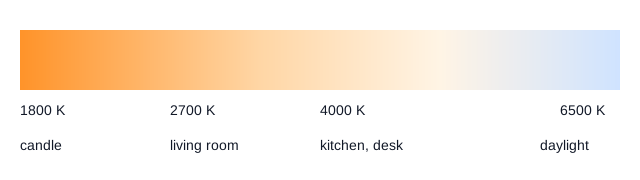
In short: pick 2700 K for rooms where you relax, 3000 K for rooms where you cook and work, and avoid mixing temperatures in one field of view.
Look for the CRI on the box as well: 90 or higher keeps skin tones and wood looking natural.
How bright should each room be?
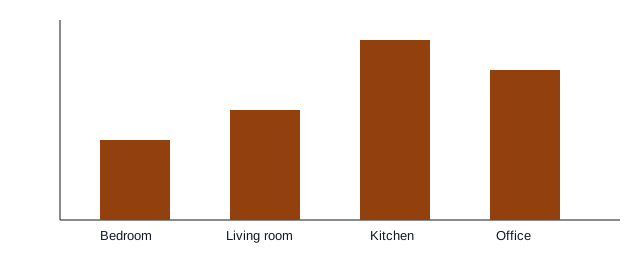
Kitchens need the most light at the worktop; bedrooms the least. Plan for dimming everywhere.
Living room     Bedroom
Two or three    One lamp each
lamps, placed   side, aimed
low. Ceiling    down, beam
light off.      kept narrow.
Layering light
Think in three layers: general light that fills the room, task light where you do something, and accent light that makes the room look deep.
Put the brightest lamp where you read, not in the middle of the room.
Use a dimmer on every lamp you use after sunset; it changes the mood more than any bulb.
Hide the bulb: a shade that covers the light source avoids glare on screens and glasses.
Match lamps within one room to the same colour temperature.
Place accent lamps low, behind plants or furniture, to make a room feel larger.
Which rooms want which temperature?
| Room | Colour temperature | Brightness | Lamps | Dimmer |
|---|---|---|---|---|
| Living room | 2700 K | 1500–3000 lm | 3–4 | Yes |
| Kitchen | 3000 K | 4000–6000 lm | 4–6 | Recommended |
| Bedroom | 2200–2700 K | 1000–2000 lm | 2–3 | Yes |
Warm and neutral light through the evening
Bulb efficiency at a glance

Notice how the shadow behind the chair makes the corner feel sheltered.
Where to go next
See the Aurora floor lamp for reading corners and the Nova desk lamp for work. Or try the lighting planner.